Breaking Free from Obsolete Security Practices: How ISEC7 SEVENCEES Helps Government Agencies Modernize

The Cost of Hanging on to the Past
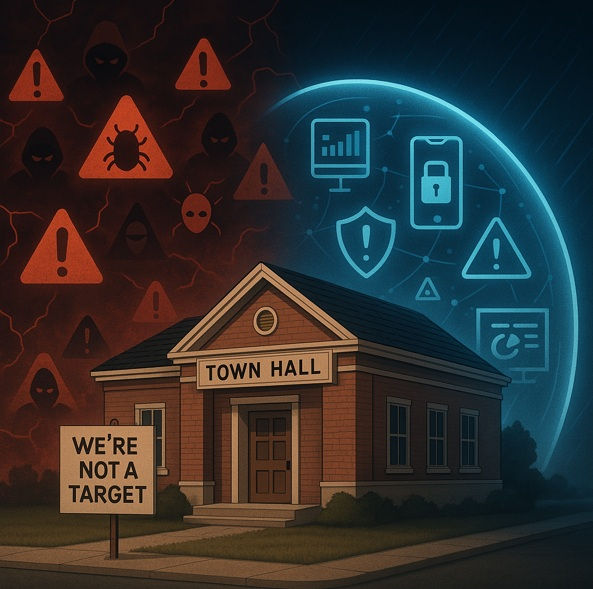
In the fast-evolving world of cybersecurity, yesterday’s best practices can quickly become today’s vulnerabilities. Government agencies, especially at the local and regional levels, face increasing pressure to stay secure amid budget constraints, aging infrastructure, and ever-more sophisticated adversaries. Yet many still rely on legacy tools, outdated workflows, or overly manual processes that fall short in a modern threat landscape. These obsolete security practices don’t just slow operations, but create real and exploitable gaps, from unmanaged mobile endpoints to data that travels unclassified, exposing agencies to data breaches, compliance failures, and reputational harm.
That’s where ISEC7 SEVENCEES comes in – a flexible, Zero Trust-aligned framework that unifies ISEC7’s purpose-built solutions and professional and managed services into a single, integrated approach. From mobile security to data classification and endpoint visibility, ISEC7 SEVENCEES empowers agencies to modernize without starting from scratch.
This article explores seven obsolete security practices still commonly seen in the public sector and how, by combining tools like ISEC7 SPHERE, ISEC7 MAIL, and ISEC7 CLASSIFY with expert services, the ISEC7 SEVENCEES framework transforms vulnerabilities into strengths through automation, visibility, and policy-driven control.
1. Managing Security Manually
Many government agencies still use spreadsheets, disconnected logs, or manual reports to track devices, incidents, or configurations. While this approach may have worked in the past, it simply can’t keep up with the scale, complexity, and speed of modern threats. Manual oversight lacks real-time accuracy and the ability to correlate activity across platforms, which often results in delayed detection and slower responses.
ISEC7 SPHERE replaces manual security management with dynamic dashboards, real-time telemetry, and automated asset tracking. It continuously monitors all types of endpoints, including mobile devices, tablets, laptops, and even SIM cards, offering a unified view of the agency’s digital landscape. With centralized intelligence and automated alerts, agencies gain speed, clarity, and confidence in their operational security.
2. Relying on Overlapping Solutions without Purpose
It’s not uncommon to see government environments burdened with multiple overlapping tools, each introduced to solve a single problem. The result is an expensive and inefficient patchwork of systems that often fail to communicate with one another. Worse, alerts are siloed—leaving IT teams struggling to piece together a full picture during incidents. Redundancy, however, is not always a bad thing. NSA’s CSfC program encourages solution redundancy for added security and resilience in the event of a product or company failure. The key is purposeful redundancy built around a strategy focused on a cohesive system that can be managed and monitored centrally to ease the complexity of multiple IT security products in use.
ISEC7 SPHERE eliminates these silos by aggregating telemetry and logs from various Unified Endpoint Management (UEM) platforms like Microsoft Intune, BlackBerry UEM, and Omnissa Workspace ONE. It consolidates signals from mobile and desktop ecosystems into one correlated timeline. This reduces alert fatigue, improves decision-making, and helps security teams understand not just what happened, but why and how.
3. Overlooking Device Threats
In many agencies, portable devices and other network connected devices are still viewed as peripheral rather than core endpoints, but this is a dangerous oversight. Smartphones and tablets are now integral to field operations, secure communications, and remote work. Seemingly harmless network connected devices such as printers, IOT devices and even coffee makers are often overlooked despite numerous instances of being used as an attack vector. Without proper monitoring, they become blind spots in the security strategy.
ISEC7 MAIL addresses this by transforming connected devices into secure productivity environments. It provides encrypted email, calendar, and contacts—all within a secure container that can be remotely wiped if needed. Meanwhile, ISEC7 SPHERE monitors mobile-specific risks such as jailbreaking, rooting, and unusual data flows. The combination ensures that mobile threats are not just recognized—but proactively contained.
4. Using Static Data Classification (or None)
Static or inconsistent classification of sensitive data is a major weakness in hybrid and remote work settings. Files may be shared, copied, or emailed without clear labels, leading to overexposure and loss of control. Worse, some organizations skip classification entirely, relying only on user discretion or reactive audits.
ISEC7 CLASSIFY embeds dynamic, policy-based data classification into everyday workflows. Integrated into Microsoft 365—including SharePoint Sites and Pages—it enables users to apply the correct classification in real time, while administrators can define rules to automate labeling and protection. Labels travel with the data, ensuring visibility and control wherever it goes, even outside the agency’s infrastructure.
5. Not Automating Incident Response
When a security incident occurs, every second counts. Yet many government organizations still rely on manual coordination to contain threats—triggering policy updates, isolating devices, or locking user accounts by hand. This not only consumes valuable time but also increases the risk of escalation. As cyber threats grow more sophisticated, organizations are shifting from traditional endpoint-focused tools like XDR to more holistic Threat Detection, Investigation, and Response (TDIR) platforms. Unlike XDR, which is often rooted in endpoint detection, TDIR integrates across the entire security stack, offering broader visibility and faster, more coordinated responses. This evolution aligns closely with the mission of Managed Detection and Response (MDR) providers, who are increasingly adopting TDIR to meet rising demands for 24/7 protection, especially amid global talent shortages and operational complexity.
ISEC7 SPHERE supports automated key TDIR processes by integrating with UEM and MTD/EDR. platforms. Based on real-time detections, it can automatically respond to detected threats and disable compromised devices, apply restrictive policies, or alert the right personnel through pre-defined response processes. This automation empowers lean security teams to respond faster and more consistently, which is especially crucial in mission-critical government environments.
6. Failing to Decommission Digital Ghosts
As discussed in a previous blog post article, “digital ghosts” and “zombie devices” are orphaned or inactive devices still connected to the network, often leftovers from former employees or outdated hardware refreshes. But these untracked endpoints can become silent backdoors for attackers if left unchecked.
ISEC7 SPHERE uses advanced detection methods to identify digital ghosts through activity history, enrollment status, and anomaly patterns. Once flagged, these devices can be investigated, locked, or wiped remotely. This ensures agencies maintain an accurate and secure inventory, reducing the attack surface and preventing forgotten assets from becoming liabilities.
7. Underestimating the Risks of Shadow IT
Employees often introduce unauthorized applications or devices into their workflow—whether it’s a personal phone, a file-sharing app, or a messaging tool. While usually done for convenience, this “shadow IT” creates unmonitored channels where sensitive information can leak undetected.
ISEC7 SPHERE uncovers shadow IT activity by analyzing app installations, configuration drift, and noncompliant behavior across mobile and endpoint fleets. When sensitive data travels outside the official perimeter, ISEC7 CLASSIFY ensures it remains labeled and traceable through embedded metadata. This dual approach allows agencies to regain control without locking down productivity.
Building a Proactive, Integrated Defense
These seven security pitfalls are not theoretical, but reflect real, persistent weaknesses across government IT environments. The good news is that addressing them does not require a massive overhaul.
By adopting ISEC7’s modern, integrated security suite, agencies can close these gaps while improving operational efficiency and compliance.
ISEC7 SPHERE provides real-time visibility, automated response, and central correlation across UEM tools and devices, acting as a command center for government IT teams, offering unified, real-time insights into all endpoints, whether mobile, desktop, or IoT. By integrating with leading UEM platforms like Microsoft Intune and BlackBerry UEM, it consolidates logs, correlates events across systems, and triggers automated actions to isolate threats the moment they're detected. This empowers lean security teams to maintain situational awareness and respond with precision, even under pressure.


ISEC7 MAIL secures mobile productivity through encryption, containerization, and endpoint control, turning mobile devices into trusted work tools by delivering encrypted email, calendar, and contacts within a secure, policy-controlled container. It ensures that sensitive government data is never exposed to unmanaged apps or storage and can be remotely wiped if a device is lost or compromised. With deep integration into existing mobile infrastructure, it balances usability with strict compliance, making secure mobility practical for public sector operations.

ISEC7 CLASSIFY enables continuous, dynamic data protection by embedding classification into files, emails, and collaborative platforms, extending beyond traditional labeling by making classification an active part of daily workflows, not just an audit step. It embeds metadata into documents and messages at the time of creation—ensuring the right protections follow the data wherever it travels. Integrated directly into Microsoft 365 and SharePoint, it empowers users and administrators to enforce data handling rules consistently, supporting both Zero Trust models and evolving compliance mandates.


Together, these solutions empower government agencies to eliminate outdated practices and adopt a proactive, Zero Trust-aligned approach to cybersecurity.
Stay Ahead of the Threat Curve
These seven security pitfalls are not theoretical; they reflect real, persistent weaknesses across government IT environments. The good news? Addressing them doesn’t require a massive overhaul.
With ISEC7 SEVENCEES, agencies gain a comprehensive cybersecurity framework that integrates cutting-edge tools with expert services. Whether it’s securing mobile endpoints, classifying sensitive data, or automating incident response, ISEC7 SEVENCEES provides the foundation for a proactive, Zero Trust-aligned defense strategy.
As cyber threats grow more sophisticated, holding onto obsolete practices is more than inefficient – it’s dangerous. Public sector organizations must rethink how they approach security, especially when defending critical infrastructure, citizen data, and government operations. By replacing manual processes, redundant tools, and outdated assumptions with automated, policy-driven, and integrated solutions like those within the ISEC7 SEVENCEES framework, agencies can finally build the resilience they need – not just to survive, but to lead.
